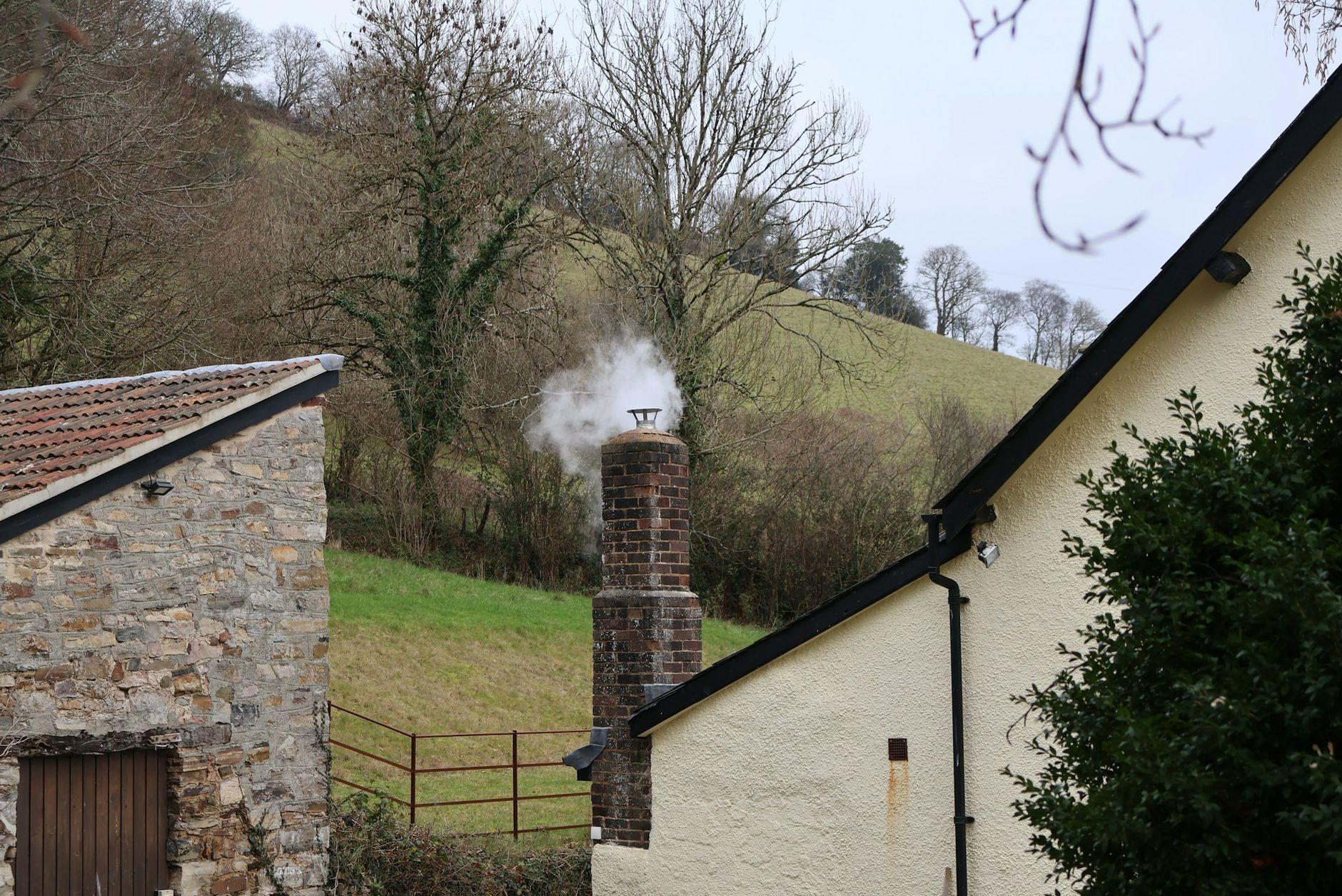
On older chimneys around Brea, the leak an owner notices in January was usually set up years before at the top of the stack. Original crowns on pre-war and post-war chimneys were often a sloped layer of the same mortar used in the joints, troweled over the top course. That sheds water for a while, then cracks, and from that point every storm feeds water into the brick below.
Where water gets into an older stack
- A mortar crown that has cracked or crumbled at the edges. Water runs into the top course and travels down the joints.
- Old flashing. Many older houses have had the metal at the roof tarred over again and again instead of replaced. Tar dries, splits and holds water against the brick.
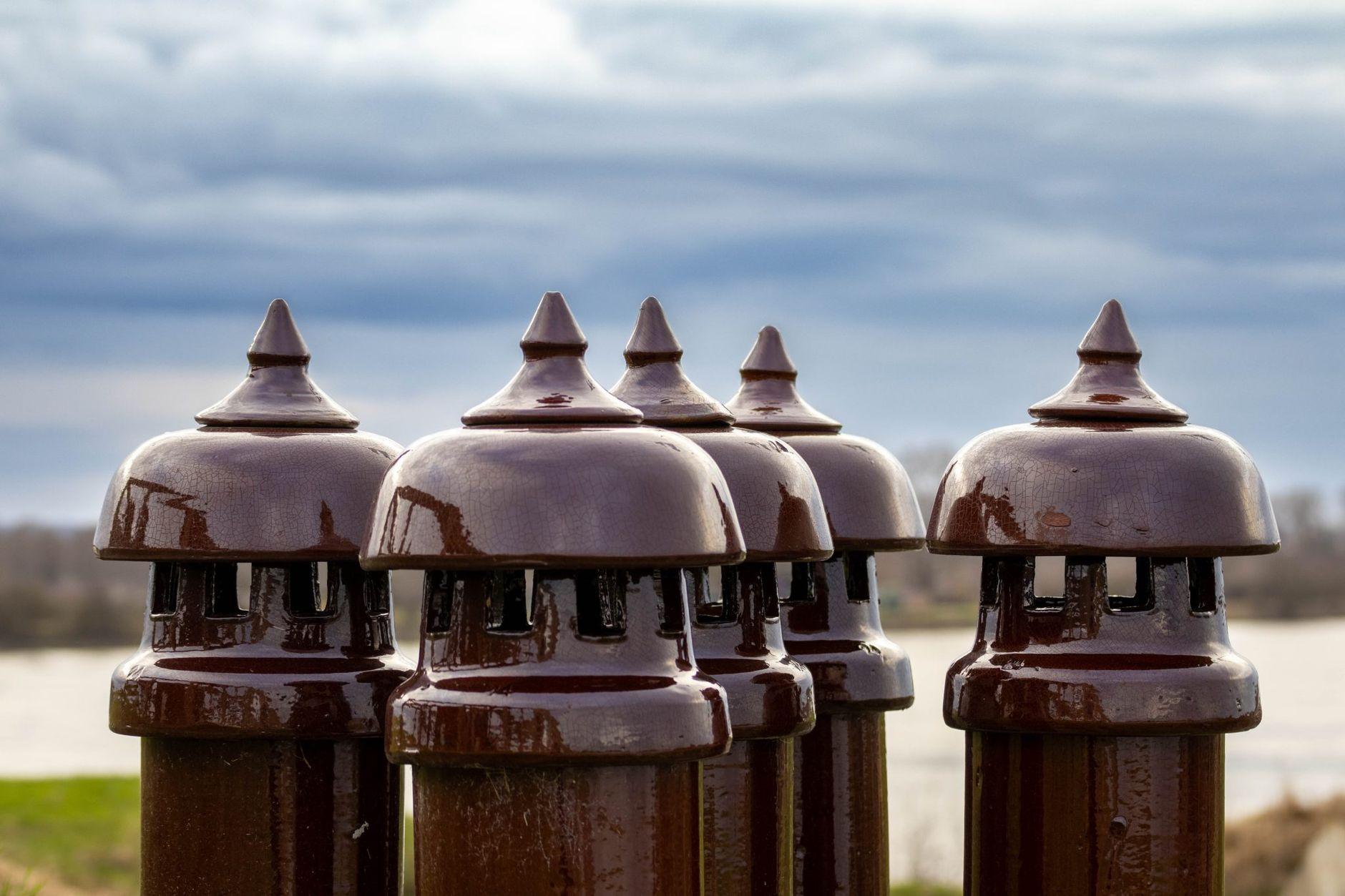
- A missing or rusted cap. Rain enters the flue directly and collects on the damper or the smoke shelf.
- Soft joints on the weather face. Lime mortar that has eroded lets water soak deep into the wall.
- The roof above a wide stack. Where nothing splits the runoff on the high side, debris dams up behind the brick every storm.
Often two of these act together, which is why patching the spot above the stain so often fails.
How we find the source
We start at the top and work down: crown, cap, the flue opening, the brick faces, then the flashing and roofing around the stack. Inside, we look at the attic framing beside the chimney and at the ceiling or wall where the mark appears. Where the cause is still unclear, we wet sections of the chimney in turn and watch for water inside. The written finding names which parts leak and which do not.
Repairing an old crown
A cracked mortar crown can be sealed if it is still stuck fast to the brick and the cracks are fine. Most old ones are past that: thin, loose at the edges, with no overhang to throw water off the face. Those come off, and a new crown is cast with an overhang and a bond break around the flue tile, so heat movement in the tile does not split the new concrete. Crown work has no published price here; the figure follows the size of the top and the state of the brick under it. Our crown repair page describes the work.
Prices for the usual leak work
| Leak work on an older chimney | Price |
|---|---|
| Camera inspection of the flue after water damage | $385 |
| Tracing the water and stopping it at the stack | $550 to $3,300 |
| Fitted cap over the flue opening | quoted after we measure |
| Sheet metal saddle splitting runoff above a wide stack | $440 to $995 |
| That saddle plus all new step and counter metal | $660 to $1,650 |
Where a leak lands inside the $550 to $3,300 range depends on how many sources there are, the roofing around the stack, whether new metal has to be cut into the brick, and whether the crown also needs replacing. Clay tile roofs, common on Spanish style houses, take longer to open and reset than shingle.
For a written figure, ask for a leak visit through the form and say what kind of weather brings the water in: any rain, only storms with wind behind them, or only after a long wet spell. That pattern narrows the search before we arrive.
Why the order of repairs matters
On an older chimney we fix from the top down. New flashing under a crown that still lets water into the brick will leak again, and the new metal gets the blame. Our estimate lists the crown, the cap, the joints and the flashing in that order, each with a price or a written figure, so you can see where the money goes. If the brick is soft, see masonry repair, and for the full leak service see chimney leak repair.
Rain in north Orange County
Brea, La Mirada, Buena Park and Anaheim get most of their rain from a handful of winter storms. A chimney can stay dry for months and then leak hard in one week, so the leak seems sudden even when the crack is old. Summer heat on a dark roof dries and splits tar patches faster than owners expect.
What owners of older houses tend to find
On a pre-war bungalow the usual culprit is the crown and the joints just below it. On a post-war ranch house with a wide brick stack through a low roof, it is more often the metal at the roof and the lack of anything to split runoff on the high side. On Spanish style houses with clay tile, flashing hidden under the tile has often rusted through long before anyone sees it. Each of those leads to a different first line on the estimate, which is why we look before we price.
Water that has been getting in for years also tends to leave damage behind: soft roof sheathing beside the stack, rusted damper plates, stained plaster on the chimney breast. Where we find it, the written finding says so, and any repair to it sits on its own line.
Questions owners ask
Can the brick just be coated? A breathable repellent helps sound brick shed rain, but it will not close a cracked crown or lifted flashing.
Does insurance pay? That depends on the policy and the cause. Our dated written findings describe what we saw; the decision belongs to the insurer.
Is a roofer needed too? On tile roofs, sometimes. The estimate says so.
If the ceiling beside your fireplace keeps marking up after storms, begin at our contact page and we will arrange a visit to trace the water.
An Older Chimney of Your Own?
Gilchrist looks after chimneys and fireplaces on older houses, with a written price for every repair and the original masonry kept where it is safe. Visits run from Brea to La Mirada, Buena Park, Anaheim and the cities nearby.