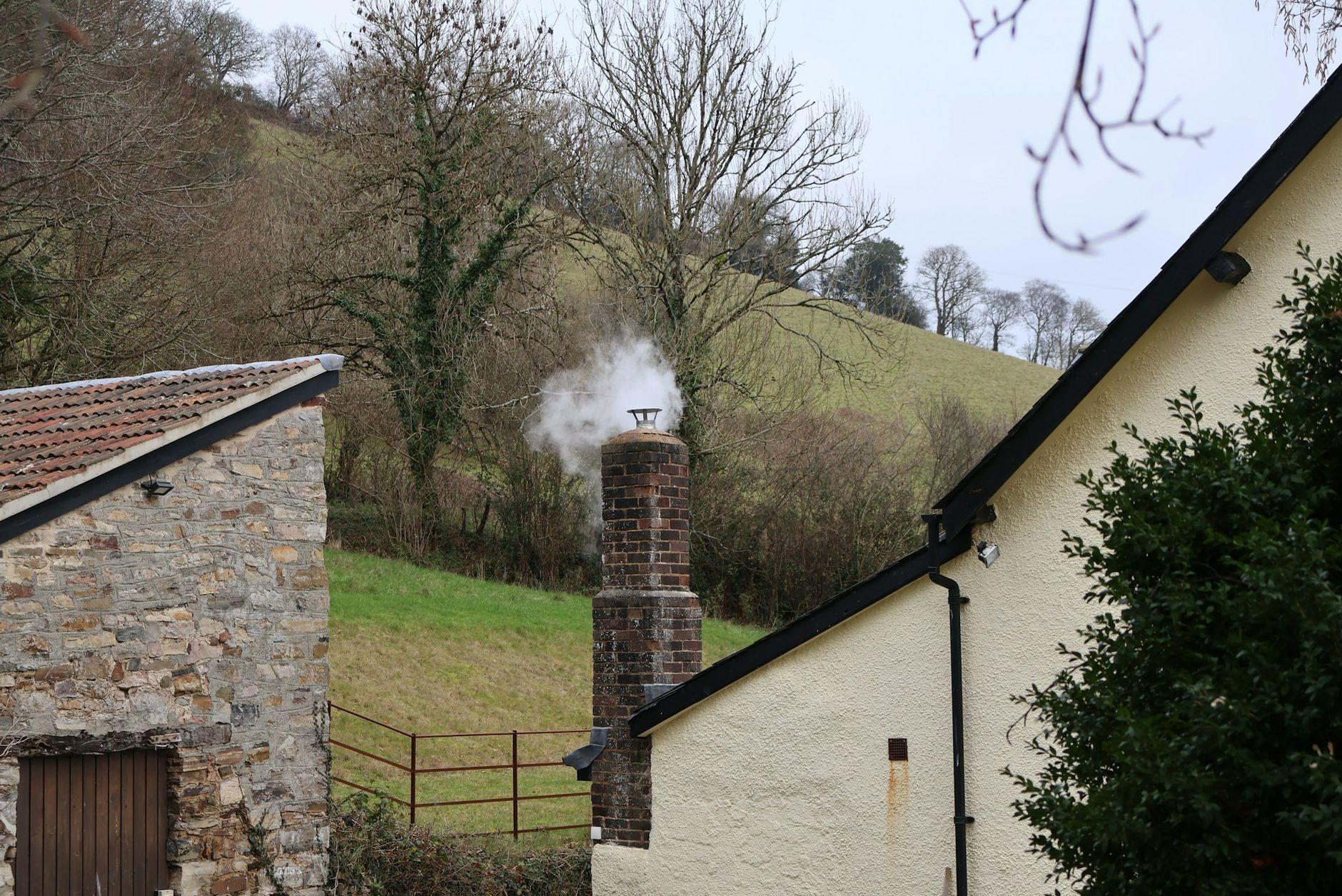
Buying a house built before 1980 in Brea or the towns around it usually means buying a chimney that has outlived several owners, a few earthquakes and at least one change of fuel. The general home inspection will note that a fireplace exists and whether its face looks sound. What that inspection cannot do is see up the flue, and the flue is where an older chimney keeps its problems.
What the standard asks for when a house changes hands
The fire code most chimney work in this country follows, NFPA 211, sets out three inspection levels. It points to Level 2, the middle one, when a home changes hands. On our price list that visit is $385. It includes everything the lighter visual check covers, plus a camera fed through the full height of the flue that records the liner from the smoke chamber to the top, and a look at the chimney wherever it can be reached in the attic and crawl space.
The lighter Level 1, at $160, suits a chimney whose use and condition nobody has reason to doubt. A sale is the moment when nobody can vouch for either.
What the camera finds in an older chimney
Older chimneys fail in patterns, and our Level 2 report is organised around them.
- Clay tile liners. Most chimneys built before the 1970s were lined with square or oblong clay tiles stacked in sections. The joints between sections were often buttered unevenly or left open. The camera shows gaps, sections knocked out of line by a quake, and tiles split by a past chimney fire.
- Flues with no liner. Some pre-war chimneys have no tile at all, so smoke runs against brick and mortar. That was normal building once and falls short of what a flue is expected to be today.
- The smoke chamber. Above the damper, older chambers were stepped brick, rough and full of ledges. Soot gathers there and the mortar between the steps erodes.
- Cast iron dampers. Old throat dampers rust, warp and stop closing. Some were taken out decades ago and never replaced.
- Above the roof. Soft joints, a crown made of a skim of mortar, flashing tarred over more than once.
Every finding in our report carries a photo or a still from the video, where it sits, and whether it affects safe use. The report itself does not price repairs; a separate written estimate does, if anyone asks for one.
Who books, and who reads the report
Either side of the sale can book. Buyers book most often, during the inspection period in their contract. Sellers of older houses sometimes order one before listing, so the camera holds no surprises later. Whoever orders and pays receives the report and chooses who else gets a copy; agents on both sides are common recipients. Our home sale inspection page sets out how that works, and agents can read the page written for them.
Booking it at the right point in the sale
Order matters more than the calendar. The chimney visit belongs in the same stretch as the general inspection, because a camera finding can change the repair request, and a request sent before the chimney report lands usually has to be rewritten. If the general inspector has already written that a chimney specialist should evaluate the fireplace, that sentence is your cue.
To set one up, request a Level 2 for the property and say whether you are the buyer, the seller or an agent, plus how many fireplaces the house has. Older houses sometimes hide a second flue for a furnace or water heater, so mention any you know of.
What a finding means for the deal
A cracked tile rarely ends a sale. It does put a number on the table. The usual fixes on an older flue are a stainless liner run inside the old tile, local repair where damage is limited, or rebuilding the flue in the worst cases. A rusted damper is replaced, or a sealing damper goes on at the top. Soft joints above the roof get repointed. We write each of those as a separate estimate on request, with set prices where this site has them, such as leak work at $550 to $3,300, and written figures for the rest. A fitted cap is quoted on site. For how those fixes usually line up, see up-to-code repairs.
Houses around Brea, La Mirada and Buena Park
Much of the housing around Brea, La Mirada and Buena Park went up in the post-war decades, with a scattering of earlier bungalows. Post-war chimneys usually have clay liners and often carry a furnace or water heater flue in the same stack. Those shared stacks need every flue checked, and the report covers each one separately. Chimneys of that age have also lived through the 1987 Whittier Narrows earthquake and the 1994 quake, and the camera sometimes shows tile sections that shifted in one of them and were never looked at since.
Questions buyers ask
Can the seller's earlier report stand in? Only if it covers the chimney as it is now, at Level 2, and you are comfortable relying on a report written for someone else. Most buyers order their own.
Is a gas fireplace included? Yes. A gas log set in an old masonry firebox still vents up the old flue, and that flue gets the same camera run.
What if the fireplace was bricked up years ago? We still look, because a closed opening can hide a flue that still serves a furnace or water heater.
To order a Level 2 on an older house you are buying or selling, head to the contact page and we will arrange access through whoever holds the keys.
An Older Chimney of Your Own?
Gilchrist looks after chimneys and fireplaces on older houses, with a written price for every repair and the original masonry kept where it is safe. Visits run from Brea to La Mirada, Buena Park, Anaheim and the cities nearby.